The Forbidden Soundtrack?
Kevin Carver released his first novel, The Forbidden Parallel, last year in May. He also released a companion soundtrack of original music that he wrote for the novel.
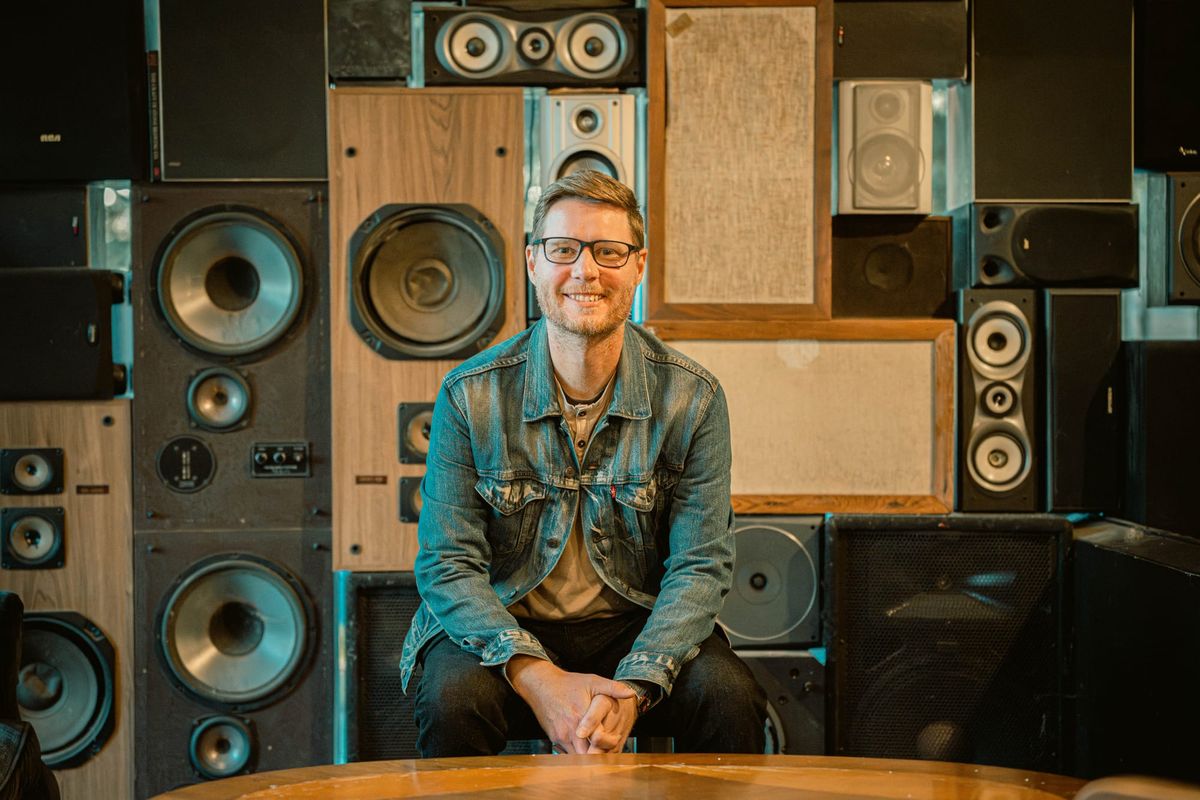
Kevin Carver released his first novel, The Forbidden Parallel, back in May of last year. He also released a companion soundtrack of original music that he wrote for the novel. While you would think that creating a soundtrack for the novel would earn points for creativity, it actually introduced potential roadblocks. Kevin explains why in our interview. (It has been lightly edited for clarity, etc.)
To order the The Forbidden Parallel novel and soundtrack, you can head to Kevin's website.
SYL: Hi Kevin, let’s start by having you tell our readers a little bit about The Forbidden Parallel.
Kevin Carver: First of all, thanks so much for having me. I’m thrilled to be here to talk about The Forbidden Parallel on [Soundtrack Your Life].
The Forbidden Parallel is the first entry in a multi-media project that spans books and music. In the novel, readers discover an adventurous tale of oppression, revenge, and revolution set within the fantasy and sci-fi genres. Accompanying the book is an original soundtrack featuring 12 compositions. The musical component emerged quite organically alongside the novel’s writing, though I admit I didn’t initially plan on ever releasing the music. It was just something fun and a creative way to take my mind off of the manuscript when I felt a little lost in the writing of it.
One song became two, two became four, and four became 12. Over time, I realized these songs were a direct reflection of the book, meaning either specific scenes or characters’ themes, and that these two pieces of art complemented one another. I had a great start with an album worth of demos, but I knew I needed proper singers, a better bass player, and a real drummer to elevate what I had done, so the final act involved me recruiting musicians, all of which were from old bands and various musical projects from throughout the years. This all resulted in a makeshift studio band of friends that I now lovingly call Kevin Carver & The Parallels.
SYL: The novel is in the Sci-Fi/dark fantasy genre. What are a couple of your favorite books/films/shows/etc in the genre?
KC: I love, love, love Stephen King’s The Dark Tower series, and I frequently use it as a comparison for my own series. Dune is another book I commonly reference, though I admittedly only enjoyed the first entry in that series (great movies, of course, even David Lynch’s). I will read anything by Ray Bradbury. He is the GOAT who masterfully blended fantasy, science fiction, and literary fiction, navigating genres with ease.
I’d be remiss not to mention Beowulf. It’s probably my book’s biggest influence, and I generally consume any and all media associated with it (e.g., various translations, comic books, novel adaptations, movies, etc.).
Speaking of comics, the graphic novel series Saga comes to mind, which is a sprawling, multi-character, multi-territory blend that I adore. The Forbidden Parallel is similarly multi-POV and at times can challenge the reader to “keep up.”
On the topic of genre, it’s worth noting that sometimes there is a hard line between science fiction and fantasy, and other times it is an obscure and pointless boundary. Personally, I think of fantasy and science fiction as cousins. They are members of the same family who often take different paths to the same destination.
SYL: It’s mentioned that The Forbidden Parallel is the start of a trilogy. Was that the idea from the start or did you realize at some point during writing that there would be enough story to make up a trilogy?
KC: There is something magical and, dare I say, nostalgic about writing a trilogy. A clean cut beginning, middle, and end. All of us fantasy writers play in the shadows of Mount Doom, and I’m certain the Lord of the Rings influenced my books’ ambitions. But I didn’t force the story into three books. I knew there would be more than one. When I finished the first manuscript, I outlined the rest of the series and was pleased to see that I could finish it all by the third entry. One book for set up, one book for movement, and a final book for resolution.
Personally, I think it’s also helpful to know that I won’t be in this fictional world forever. I do love the world of Arou and its many characters and ever-unfolding lore, but as an artist and creator, I’m also drawn to worlds I haven’t yet discovered.
SYL: You’ve created a soundtrack for your novel. It’s not a collection of needle drops of other artists - it’s original music that you’ve created. Did you tell your publisher that you were making a soundtrack for the novel? If so, what was their response?
KC: In case you might be unfamiliar with the querying process, querying publishers or agents means pitching your book in hopes that you will be picked up and signed. You’re one of hundreds of emails they receive daily. It’s a laborious process, and pretty much everyone hates it. When I was querying publishers, I hoped the soundtrack would be a big differentiator, in terms of standing out and breaking through the noise, but it may have been hurting my pitch more than helping it.
I was lucky enough to eventually receive an offer from a publisher, so I met with an entertainment lawyer to review the contract. The lawyer shared that the soundtrack introduced a layer of complexity regarding distribution rights. This likely turned off some of the other publishers I had conversed with. It was explained to me that, technically, the soundtrack could be seen as a type of “performance” of the material — in a similar way that an audiobook would be viewed as a performance. There are a couple songs that feature direct lines from the book as lyrics. And because a publisher claims rights on ALL distribution methods… well, it got messy.
I eventually had to prove that the soundtrack wouldn’t directly compete with the release of the book. This is one reason why the soundtrack’s cover is so different from the book’s cover.
SYL: Do you remember the first soundtrack that you bought / received as a gift? If so, what soundtrack did you get?
KC: Most of my earliest interactions with soundtracks were Various Artist collections, and there are a couple that come to mind. I’m a Millennial, so you will probably be unsurprised to learn that one of the most important albums I ever bought was the soundtrack to the movie Garden State. It was immediately so iconic and introduced me to a wide variety of indie artists that were previously not on my radar. In addition to getting me hooked on The Shins, it also pushed me into being unafraid to embrace more female-fronted pop acts like Frou Frou. It may sound dated now, but as a teenager in the early 2000s, it was unconventional for high school boys to listen to pop-oriented, female-fronted music. The album itself was a statement, a mix-tape made for a society that had been fed Top 40s music for 50 years. In this way, I loved how the soundtrack represented more than just a collection of unrelated tracks slapped together by a corporate team. It was artfully and purposefully curated.
Perhaps less tasteful–but just as important to me–is the soundtrack to the movie Orange County. At the time, I was just a casual fan of the band Cake, but the song “Shadow Stabbing,” which was featured heavily in the movie and of course included in the soundtrack, led to me being hooked on Cake for life. It’s no coincidence that the movie is about a writer and that the song is about writing.
SYL: What is your favorite soundtrack?
KC: Superfly by Curtis Mayfield is undeniably the best soundtrack ever. And keep in mind, I’m a very casual fan of funk and ‘70s R&B, so there’s no genre bias here. It’s just that good. Simply and eternally good. It transports you. It creates texture. It’s resonant. It’s fun. It literally checks all the boxes and does everything well.
SYL: Do you have a favorite score? Who are some of your favorite composers?
KC: Oh, absolutely. I bounce around all of Howard Shore’s Lord of the Rings scores, but The Two Towers is the one I’ve listened to the most. I think it’s because I still have it on CD, and I have a CD player in my writing nook, so it gets a lot of spins. Start to finish that score just puts me in the mood to mount Shadowfax (my pen) and write like the wind.
SYL: Your website says that your soundtrack is for:
Genre(s): Indie-Alternative, Progressive Rock, Instrumental, Post-Punk
Bands: Nada Surf, Thrice, Pink Floyd, Mars Volta, mewithoutYou
Give me a list of 5 of your favorite bands/albums.
KC: Wow… that’s a big question. This is something that I reserve the right to change my mind.. like as soon as tomorrow. But I’ll do my best not to overthink it and list the first that come to my mind. In no specific order:
London Calling by The Clash, Live at Folsom Prison by Johnny Cash, Abbey Road by the Beatles, Wish You Were Here by Pink Floyd, and In Rainbows by Radiohead.
SYL: When did you become a musician? Was there a band or artist that inspired you to start playing an instrument?
KC: I was a late bloomer and didn’t start taking music seriously until around 15 or 16. We didn’t have smart phones back then, and I’m so grateful for that, because I had lots of time to kill with little else to distract me. I learned some basic power chords, and then I would just do my best to learn each song on an album, playing through from start to finish: Weezer’s Blue Album and Blink 182’s Enema of the State come to mind.
When I think of a specific musician who inspired me, I have to shout out my Uncle Steve. He is a career drummer who owned a drum shop for most of my life, so I grew up around stacks of drum kits, walls of symbols, and cubbies of sticks. He graciously taught me a few things. He also let me have a key to his drum lesson studio (in exchange for cleaning them once/week), and I would jump on the kits and play until midnight or later. To teach myself drums, I did the same thing that I had done with guitar and learned entire albums, one track at a time. Copeland’s In Motion was one of these; it is just such a fun and underrated drum album.
SYL: Other than The Forbidden Parallel soundtrack, is there a soundtrack that we haven’t covered that you hope we cover on our podcast?
KC: I’m a shameless collector of things I don’t need, and one of the weirdest hobbies I have is collecting old James Bond soundtracks on vinyl. I have around 10 or so, as well as a few extra Bond collections, both official and unofficial. It all just happened by accident. A yard sale here, a used bin there. Suddenly I was seeking them out and doing research. What can I say? Collecting is weird.
So, maybe pick a James Bond soundtrack at random. Each has its own story.
SYL: Which fictional character from movies or TV do you think would have the best taste in music?
KC: Easy answer! Rob Gordon (John Cusack) from High Fidelity. That whole movie is about musical tastes, both the validity and subjectivity of it. I think you can trust his tastes because Gordon has an encyclopedic knowledge of music and music history, which is important. There’s nothing worse than listening to musical hot takes from someone who has never challenged themselves to listen to different genres, bothered to listen to the classics, or showed up early to catch an unknown opening act. Love him or hate him, Gordon knows music. It doesn’t mean you have to agree with him, but it does mean you can trust he’s put a lot of thought into it. Now, just don’t ask him how he organizes his collection.
Speaking of Rob Gordon, we did an episode on High Fidelity! Check out our episode!